
Friday, 14 September 2018
NTU Philosophy Student Conference
BRITISH PERSONALIST FORUM
STUDENTS’ WORKSHOP ON ‘ETHICS OF THE PERSON’
SATURDAY NOVEMBER 10th, 10.00 to 4.30.
at
ROOM 307, THE BOOTS LIBRARY
NOTTINGHAM TRENT UNIVERSITY, 50 SHAKESPEARE ST, NOTTINGHAM
google.co.uk/maps/@52.9581654,-1.1541771,17z
NO FEES!
Drinks and snacks will be available in the café in the library.
This Workshop is designed primarily for undergraduate and postgraduate students but everyone is welcome.
(Students at Nottingham Trent University will be given advance notice.)
Would all who wish to attend please contact us at webmaster@britishpersonalistforum.org. uk by November 3rd so that we can arrange the seating.
PROGRAMME
10-10.30 Registration and welcome;
10.30-12.30 Four 30 min. sessions.
12.30-1.30 Lunch
1.30- 3.30 Four 30 min. sessions.
3.30-4.30 General Discussion and Close.
PAPERS
We prefer speakers’ own thoughts about their chosen topics, or at least critical accounts of work by others with positive alternatives to any negative ones.
The maximum time given for each paper will be 20 mins, and this will be strictly enforced to allow for 10 minds discussion.
The deadline for submission of papers: 12 noon, Friday October 12th
Please send them to webmaster@britishpersonalistforum.org.uk
SOME SUGGESTIONS FOR TOPICS
The role and value of persons in:
Utilitarianism or other consequentialisms,
Kant’s ethics,
situation ethics and moral particularism,
virtue ethics,
individualism or collectivism,
or any other system of ethics.
What aspects of persons are morally significant?
The choice of either egoism or altruism.
Justice and persons.
For more about Personalism go to britishpersonalistforum.org.uk and follow the links.

Friday, 4 May 2018
Scientists reanimate disembodied pigs’ brains – but for a human mind, it could be a living hell
Scientists reanimate disembodied pigs' brains – but for a human mind, it could be a living hell
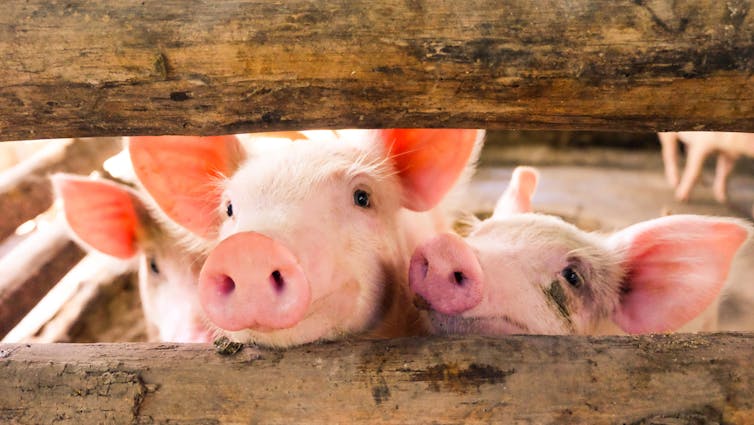
Do you want to live forever? If so, there’s some good news. Or so it seems. For it appears that we may have taken a step closer to making immortality reality. In a recent meeting at the National Institutes of Health, Yale neuroscientist Nenad Sestan revealed that his team has successfully reanimated the brains of dead pigs recovered from a slaughterhouse. By pumping them with artificial blood using a system called BrainEx, they were able to bring them back to “life” for up to 36 hours.
Admittedly, the pigs’ brains did not regain consciousness, but Sestan acknowledged that restoring awareness is a possibility. Crucially, he also disclosed that the technique could work on primate brains (which includes humans), and that the brains could be kept alive indefinitely.
But could you really survive the death of your body? And would such an existence be worthwhile anyway? In fact, the answers to these questions are far from clear. So perhaps the news for those seeking life eternal isn’t so good after all. It certainly raises a whole host of worrying ethical questions.
Trapped inside your own mind
Even if your conscious brain were kept alive after your body had died, you would have to spend the foreseeable future as a disembodied “brain in a bucket”, locked away inside your own mind without access to the senses that allow us to experience and interact with the world and the inputs that our brains so crave. The knowledge and technology needed to implant your brain into a new body may be decades, if not centuries, away.So in the best case scenario, you would be spending your life with only your own thoughts for company. Some have argued that even with a fully functional body, immortality would be tedious. With absolutely no contact with external reality, it might just be a living hell.
According to some, it is impossible for a disembodied brain to house anything like a normal human mind. Antonio Damasio, a philosopher and neuroscientist, has pointed out that in ordinary humans, brain and body are in constant interaction with each other. Every muscle, nerve, joint and organ is connected to the brain – and vast numbers of chemical and electrical signals go back and forth between them each and every second. Without this constant “feedback loop” between brain and body, Damasio argues, ordinary experiences and thought are simply not possible.
So what would it be like to be a disembodied brain? The truth is, nobody knows. But it is probable it would be worse than being simply tedious – it would likely be deeply disturbing. Experts have already warned that a man reportedly due to have the world’s first head transplant could suffer a terrible fate. They say his brain will be overwhelmed by the unfamiliar chemical and electrical signals sent to it by his new body, and it could send him mad. A disembodied brain would be likely to react similarly – but because it would be unable to signal its distress, or do anything to bring its suffering to an end, it would be even worse.
So, to end up as a disembodied human brain may well be to suffer a fate worse than death.
Would you even be you?
It is far from clear whether your disembodied brain would even be you. The question of when people die is the subject of ongoing philosophical debate as well as my own research. In a number of published papers, I have investigated this question and how it relates to what makes us who we are, how we persist over time, and what changes we can survive. Some working in this area think we are purely psychological beings, and so could survive as disembodied brains so long as our memories and personalities were preserved.But according to one view, known as “animalism”, we are inseparable from our whole organism – our entire body, made up of cells, flesh, bone and organs. According to this philosophy, what makes us “us” dies when our whole organism dies – even if our brain survives. So, because you die when your body does, your brain cannot be you. And so even if it has the same personality and memories as you, it can only be, at best, a psychological duplicate of you.
But we should also be deeply concerned about the possibility of reanimating conscious human brains from an ethical standpoint. According to the dominant view in ethics, living human beings possess full moral status – that is, they are deserving of the highest possible degree of moral respect. They have such a status by virtue of possessing high-level psychological properties that are grounded in the capacities of the conscious human brain. And so, according to this view, irrespective of whether your disembodied conscious brain would be you, it would still be an entity with full moral status.
 And so the bottom line is this: to keep a disembodied conscious human brain alive may well be to subject an entity with full moral status to an existence of hellish tedium, or to the mental torture of inescapable madness. Essentially, to a fate worse than death. In my view, not even the promise of eternal life is worth this terrible risk.
Benjamin Curtis, Lecturer in Philosophy and Ethics, Nottingham Trent University
This article was originally published on The Conversation. Read the original article.
Tuesday, 24 April 2018
Philosophy of Religion Talk - Weds May 2nd, 2-4
There will be a talk on the Philosophy of Religion, next Weds, May 2nd 2018 at 2 'til 4 - room tba.
Dr Conor Cunningham of the University of Nottingham will be presenting a paper entitled 'Soul and the Marriage of Discourse: The Nightmare Dreams'. In his talk, Conor will be exploring the important ethical and metaphysical question of whether there is 'life before death'. Here is an abstract of his presentation:
Given materialism we are dead, we are the living-dead: we face the most pressing of questions: Is there life before death? The illegitimate ascendency of scientific discourse as the master mode of knowledge has led us as a species to this abyss, wherein truth goodness and beauty are gone, all ethics too, and all explanation for any intelligibility - all thought, even the slightest. Against this, the ancient notion of scientia (knowledge) rejects all modes of reductionism, or scientism, instead calling for a marriage of discourse, within which disparate modes of engagement with existence generates plenitude, rather than atrophied accounts of reality with its accompanying nihilism.
Conor is a self-consciously 'punk philosopher' - and so he should provide us with entertaining food for thought and some much need intellectual stimulation! Please contact Neil Turnbull (neil.turnbull@ntu.ac.uk) if you would like to attend this event.
Monday, 10 November 2014
Influence of Plato and Aristotle
Hi, I'm Sophie. I'm the second blogger after Shane who has already posted an extremely useful and interesting piece. Anyway, in Neil's lectures we seem to moving on from Ancient Greek philosophy and I thought it might be helpful to consider both Aristotle and Plato's influence on later philosophy. I know we have discussed many philosophers so far but for practicality I have narrowed in down to these two (I have left out Socrates on purpose because he really does my nut in).
According to the Stanford Encyclopedia of Philosophy, Aristotle's influence on later philosophy is 'difficult to overestimate'. His legacy is clearly apparent in the works of many philosophers, including Thomas Aquinas who later revives many Aristotelian themes and cements Aristotle's philosophy into the principles of Christianity. His publications cover many topics including physics, metaphysics, politics and aesthetics to name a few and he has also had an effect on the field of ethics where the ethical theory of Virtue Ethics was developed using his ideas on morality.
Plato on the other hand, has also contributed a considerable amount to later ideas. A.N Whitehead described Western Philosophy as 'a series of footnotes to Plato'. Plato's Theory of the Forms and his distinction between entities and abstract concepts has appeared in many of his works and he purposefully leaves questions unanswered in texts such as Euthyphro, which have created many interesting debates for later philosophers. Plato's dialogues have portrayed Socrates and his ideas including the 'Socratic Method' and have opened an otherwise impossible understanding of Socrates who did not write many of his own ideas down.
So, who do you think has been more influential to later thought? It would be nice to get a discussion going..
Saturday, 8 November 2014
Brief introductions and a look at analytic philosophy
Hello fellow philosophy students. My name is Shane Hutchinson and I'll be making contributions to our blog every weekend, or at least as often as I can manage.
I thought I'd start with an area I know is not everybody's favorite, analytic philosophy. On Friday this week with Ben Curtis, we looked at propositional logic, it's language and uses. Though some parts may been hard to follow, it seemed to me to be a very useful tool in the analysis of arguments. This is for a few reasons.
For one, by deconstructing an argument into its propositional form we are able to eliminate a lot of the ambiguities that are often a bane to productive philosophy. Once any argument is clearly set out into premises and conclusions, there can be no mistaking what it is a philosopher is arguing for. For example, in the case of the argument:
'If ghosts exist then there is something physics cannot explain. If ghosts do not exist then psychics are liars. But psychics are not liars, so there is something that physics cannot explain.'
as presented in the seminar as the object of a task in which we were to put the argument in propositional form, the language caused some students to believe the conclusion was in fact that psychics are not liars. This would have meant they would have misunderstood the intentions of someone presenting this argument. However, with the argument presented as follows:
'1. If ghosts exist then there is something physics cannot explain.
2. If ghosts do not exist then psychics are liars
3. Psychics are not liars
C1. There is something physics cannot explain
C2. Ghosts exist'
it is impossible to misrepresent either the intentions of a philosopher or the implications of any argument they present.
I think that the main confusion has been over the fact that you do not have to accept a valid argument as fact or even as a good argument in virtue of it's structure. Rather, the assessment of validity can be viewed as a kind of quality control on arguments, which prevents illogical arguments from being taken too seriously. Rather, it is the assessment of soundness which occupies much of the inter-disciplinary areas of philosophy and a sound argument is much more likely to convince than one which is only valid.
What do you think about analytic philosophy? Is it just an abstract form of logical analysis reserved for those in ivory towers or does it have a place in debates? Either way, can you see yourself using it? And if not, why? Would the invalidity of an argument convince you to oppose it?
Tuesday, 28 October 2014
Wisdom and Redemption
In class we explored some of the similarities and differences between Socrates and Jesus. In much Christian theology, Socrates is seen as an early proto-type of the Christ figure, as he in some sense embodies the good in the way that he lives his life and because is prepared to die for a higher human ideal.
However, Socrates does not present himself as a redeemer. He does not claim to be the 'highest good incarnate; (this is not possible for Socrates, as the good can only be grasped partially and 'for the most part' in his view).
This raises an important question - what is the relationship between wisdom and redemption? Can knowledge alone transform human life for the better, or is something else required? More specifically, is a spiritual or supernatural supplement required in addition to knowledge in order to put individual and collective lives on the right track or is rational knowledge alone sufficient?
Neil Turnbull
Philosophy Visiting Speaker Series - 2014-15
Time Wednesdays 3-5
19th of November –
Dr Will Large, University of Gloucestershire
Title: “The Impossible Possibility of Human Capital: Kierkegaard, Foucault and Biopolitics”
3rd of December –
Dr Kathleen Stock, University of Sussex.
Title TBA: ‘Imagination and Fiction’
January 7th –
Matt Barnard, Manchester Metropolitan University
Title: Freedom Beyond the Will: Heidegger on Finite Liberty
January 14th – Dr Adam Kelly – University of York
Title: In Quest of American Sincerity: Stanley Cavell and David Foster Wallace
This talk will examine how Wallace's widely noted obsession with questions around sincerity - an obsession shared by many American writers of his generation - led him to a deep engagement with the work of Cavell. After an introduction to the general issues involved, the main part of the talk will be taken up with exploring Wallace's annotations to books by Cavell in his personal library, held at the Harry Ransom Center in Austin, Texas. I'll end by reading a chapter of Wallace's final unfinished novel The Pale King (2011) through the notion of "good posture," an idea Wallace gets from Cavell who in turn takes it from Emerson. It is this idea, I'll argue, that offers the key to understanding the particular brand of American sincerity that Emerson, Cavell and Wallace were all in quest of.
January 21st – Prof Stephen Mumford –University of Nottingham
Title: New Meditions on First Philosophy
We can doubt the existence of many things. They might be a social or linguistic construction. But nothing is socially constructed unless causation is real for society is said to construct something. And a society is not a mere plurality but one that must involve causally interacting parts. Societas ergo causalitas. Once established, causation can be understood as that which makes the world regular and comprehendible. Without it there is no life. It provides for us. What thing better deserves the name God? For note that God could not have created anything unless causation was already real; and this includes causation itself. He could not have created it unless it already was. But what is causation? Hume thought of it in terms of constant conjunctions and counterfactuals. But just as neither society nor God can have made causation, the individual alone cannot either, as the private language argument shows. Causation is then to be taken as the criterion of existence and is the thing from which everything else is constructed. Matter is power, as are properties, and all events and processes are manifestations of that causal power.
January 28th – Dr Garry Young – Nottingham Trent University
Title: Should there be virtually no limit to the things we are permitted to do in video games? A moral examination of symbolic taboo activity within single-player gamespace.
Monday, 28 April 2014
Heidegger and Authenticity
Last week Craig Clancy from the Open University delivered a nice introductory session of Heidegger's idea of the call of conscience and how it relates to the idea of authenticity - especially in the second part of Heidegger's magnum opus Being and Time. He trotted through most of the concepts that Heidegger deploys to powerful existential effect in that book, especially authenticity's relation to Dasein, the real, the 'fallen' state of everyday life, freedom, death, demise, mood and guilt. Craig correctly pointed out that Heidegger gives all of these terms an important ontological inflection in understanding them from the point of view of time.
The key question to emerge from the discussion is the extent to which the early Heidegger can be viewed as a moral philosopher and whether his ethics emerges from an essentially theological context (or not).
Thanks to all of you who attended this - we hope to see a few more of you at these events next year
Neil T
Monday, 2 December 2013
Philosophy and Religion
Kicking off the first blog post of the academic year with
such a controversial topic – religion. Not long ago we had a seminar on
Christianity and Philosophy, and the question ‘Is religion and philosophy the
same thing? If not, then what are the basic differences?’ was asked and it came
up with a very interesting debate.
The first idea we came up with was that yes, they were the
same – they are both a set of ideals or beliefs that one attempts to base a
life around. However, this seemed to be a too general description. If this was
true, then it would also have to include the political system as a philosophy
(and while some political ideas are philosophical in nature, most are not) and
it would also have to include the many other ‘groups’ that follow rules, or
suggestions as the case may be, and we would have no need for names for all of
them, if they all just came under ‘Philosophy’.
Our next idea was that they are similar, but not the same.
Philosophy is the study of life, origins, happiness and the afterlife using
reality and the experiences and experiments of everyday life, whereas religion
was the explanation of life, origins, happiness and the afterlife using the teachings
of a God, or at least his messengers, without exploring further.
However, this explanation led to the very finite decision
that religion is, was and always will be unable to evolve. In certain cases
this would certainly seem true (for example, it remains against homosexuality,
for certain aspects of the patriarchy and the ideas of heaven and hell) but as
we have seen throughout history this is not always the case (for example, the
bible condones slavery, child marriages and the stoning of none-virgin
brides-to-be, all of which have since been cast aside)
This discussion then led to a definition of ‘Philosophy is
questions that may never be answered, where religion is answers that may never
be questioned.’
Of course this debate didn’t take into the account other
religions, such as but not limited to Hinduism, Sikhism, Judaism and Buddhism.
Some are vastly similar to Christianity, with the worship of a deity that gives
them answers to life’s mysteries, whereas, for example, Buddhism, does not
follow a deity, but a set of teachings that instead of explaining life teach
how best to navigate it and limit ones suffering, which would lend itself more
toward Philosophy than it does religion.
So then a definition of ‘Religion is the following of an
all-powerful deity, whereas Philosophy is the following and expansion of the
pre-existing teachings of men’ and this was the closest we could get to an
answer that we all agreed upon (which, coincidently, filed Buddhism under
Philosophy as opposed to religion)
Sunday, 28 July 2013
Civility and Toleration
I would like to report on one of our more interesting visiting speaker presentations - by Medhat Khattar, a biologist here at NTU. Medhat introduced the some of key ideas of the political philosophy of R.G. Collingwood, especially the concept of toleration and how it articulates itself into wider notions of civility.
Collingwood's political philosophy explores the 'paradox of toleration' - why tolerate something that you actually disapprove of? According to Collingwood, we must disapprove of things we find intolerable but yet still tolerate. To tolerate without disapproval is to render ourselves merely 'indifferent' and thus in a sense radically unjust. Thus for Collingwood, the opposite of toleration is not intolerance but indifference. Tolerance is active, whereas indifference is merely passive.
Tolerance is related to atonement, love, hope and especially to forgiveness. It thus has its roots in Christian theology and Collingwood's political philosophy is an attempt to articulate in secular terms something that is fundamentally religious in nature. This for Collingwood, modern liberalism, the political philosophy that extols toleration above all others, is grounded in Christian theology. The true ground of liberalism is the Christian God of equality that values the worth of every human being. This is the absolute presupposition of liberal political philosophy, the assumption that all forms of liberal argument presuppose and depend upon (even though most liberals are scarcely aware of them). The absolute presupposition of toleration in liberalism is itself a theological presupposition in another guise.
Neil Turnbull
Tuesday, 9 July 2013
Post-Liberalism
Does the Left Have a Post-Liberal future?
I recently attended a conference at Nottingham University that examined the philosophy, theology and politics and the Blue Labour phenomenon; a broadly Aristotelian innovation within the Labour movement that promotes the values of (as its leader Maurice Glasman puts it) ‘vocation, virtue and value’.
It is interesting that Blue Labour likes to think of politics in terms of trinities, because a significant element of Blue Labour thinking is post-secular in orientation. This was clearly reflected in John Milbank’s highly stimulating presentation where he argued that secularism is neither inevitable nor necessarily normative. In his view, secularism is a kind of Christian heresy and the intellectual legitimacy of its liberal forms is now increasingly challenged by a post-secular political philosophy that links the left’s traditional concern with greater economic justice with theologically inspired ideas of personal virtue and honour. Here, the capitalist mechanics of commodification are counterpoised with a ‘neo-Maussian’ economy of gift exchange. This in turn brings with it a mediaeval idea of politics of friendship and a Burkean problematic of community and the common good.
The key philosophical issue here is ‘what constitutes a good?’ ‘What broad ends of flourishing should human beings pursue?’ For Milbank, the genuine good remains the good even if everyone votes to reject it. Drawing on Aristotle, Milbank claims that knowledge of the good is a kind of skill, a knowing how to behave and conduct oneself in appropriate ways in appropriate contexts; phroensis - a kind of moral art, or tact. This shows the extent to which ‘right and wrong’ cannot be precisely defined in the Aristotelian tradition.
Aristotelian philosophy suggests that individuals are capable of participating in the good, and acting and reacting in ways that we recognise as good. This is the essence of post-liberalism. Milbank claims that it is now clichéd to claim that liberalism offers an optimistic view of human nature. However, in his view precisely the opposite is the case. In fact, liberalism assumes that human beings are greedy and selfish. Its roots lie in metaphysical dystopias of Hobbes and Locke. Also important in this context is Adam Smith’s Jansenism and Calvinism, where it is proposed that human beings are so depraved that public virtue becomes impossible (this, argues Milbank, is the ideological root of Adam Smith’s idea of the ‘hidden hand’).
An optimistic strand of liberalism can be found in romantic liberalism – especially the ideas of Rousseau, where the solitary natural individual is good, and egoism emerges from rivalry and comparison – that is from society. Here the state becomes the mechanism that returns to us our natural isolated innocence that threatens to collapse the liberal ideal of the emancipated individual into a tyrannical collectivity (20th century statism being the most obvious pathological symptom of this tendency.
Milbank then discussed the politics of the New Left – the politics of emancipation that became the fashion after May ’68. Milbank suggested that this politics cannot conform to s shared norm and misreads the necessity of hierarchically organised care. In so doing, as many have pointed out, it tacitly assists the cause of right wing liberalism that it seeks to oppose. The New Left, in this scheme, is left liberalism shorn of its socialist heritage; a liberalism that celebrates random individual desire. In Milbank’s view it ignores, trust, friendship, reciprocity and in this way cuts against the grain of human aspiration as most people pursue association. People are basically Hobbits in Milbank’s view.
Overall, Milbank attacks the liberal idea of the priority of evil in human affairs. He accuses it of Catharism that denies the possibility of ‘higher happiness – eudaimonia. This, he believes, is the main aim of government – to increase human flourishing. However, this requires a commitment to metaphysical truth. In Milbank’s view, the lack of belief in metaphysical truth in contemporary liberalism engenders criminality and the breakdown of the social order. Human beings want recognition for excellence rather than a primal hording and this anthropology provides the basis for a co-operative civil economy socialism based around associationism and gift exchange. This is another politics of the third way – of the radical centre, that aims to expose the hidden collusion between two seemingly opposite political poles, what are in fact two versions of political liberalism
Neil Turnbull
Saturday, 2 March 2013
The Philosophical Gamer: Deus Ex - Human Revolution
Foreword:
This is the first in what I hope will be a series of posts on philosophical themes in the video game industry. This will be of most use to Philosophy of Media and Philosophy and Everyday Life students, but it's aimed at everyone and will hopefully provoke some interesting debate!
Enjoy :)
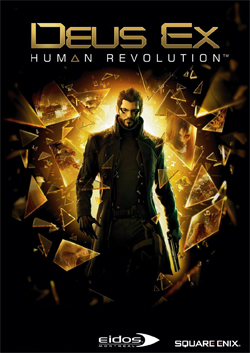
TL;DR: (too long, didnt read) Deus Ex's major themes are transhumanism, existentialism, artificial intelligence, and capitalism. Try it!
Prequel to the original and critically aclaimed Deus Ex, "Human Revolution" delves further into philosophical themes largely skimmed over in the first game, namely Transhumanism. But first, lets get some context.
The Setting
Whereas the orignal was set in a more "far future" setting where every man and his dog has whimsical cybernetic gizmos coming out of their ears, Human Revolution is a much more "near future" experience, set years before when cybernetic "augmentations" are just beginning to make an impact on society.
You step into the shoes of Adam Jensen, cop turned corporate security chief, and due to a rebuilt-after-accident gimmick, (something totally not exploited in modern storytelling) the most augmented human on the planet. You also have a unique immunity to the side-effects of augments, i.e. the human body not being ok with bits of metal jammed in it, thus he doesnt need to take the medication to avoid this, but this will be explored later. Jensen is hired on to the security wing of a leading cybernetics company when stereotypical shadowy military types storm the building, kidnap the love interest alongside box-of-top-secret-whatnot, and render Jensen crippled and on the brink of death. His boss, taking a page from the Umbrella Corporation School of Human Resources takes the opportunity to cram Jensen with more cybernetic gadgetry than the space shutte. Voila! One gritty superhuman with a chequered past and an axe to grind.
Now referred to as the next stage in evolution by his employers, and an unnatural bucket of bolts by his enemies, Jensen will wander a neo-renaissance Earth and see first hand the effects of the revolution of cybernetics and, as is customary, uncover a deep conspiracy and save the earth. Hurrah.
The Themes
- Transhumanism
At the core of DE-HR's story is the fundamental question of what it means to be human. Indeed, Jensen himself is quite literally "more machine than man", who among other things, can see through walls and is immune to toxins. But on top of that, while Jensen is superhuman by pure accident, many people in this world choose to replace their original body parts with new augmentations. Does replacing body parts with durable, reliable machinery make you inhumane, or unnatural?
On the one hand yes, it does. Humans are organic life which evolves, sustains itself, reproduces and dies. Intergrating something synthetic into that means that you can no longer really call yourself an organic lifeform. You're robbed of the need to evolve, you can live an unnaturally long life, perhaps even become quasi-immortal if machines replace vital organs. As a matter of fact, during this story you can hear a young couple lamenting over their choice to "augment". They can no longer feel each other when they hold hands. Just cold metal. At another point, you hear a woman tell of how she needs, not wants, needs to be augmented in order to keep her job as a stock broker, else she'll lose out to people who can afford the implants.
But on the other hand, if we are to call this unnatural then we must look back at the entirety of human history and ask a serious question; aren't we already unnatural beings? Right now, I'm not actually talking to you. I'm sitting at home in my PJ's, creating my message on a device created in a factory, which can access this profoundly unnatural realm of exitance, i.e. the internet. Those of us with short or long sight, use synthetic lenses to correct our vision. If we break our legs, we are given a crutch. Even when you read a book, you're utilising something unnatural to convey ideas that cant be expressed in the "natural" world. We already use technology to enhance our lives, so why is this such a big moral leap?
- Capitalism
More of an undercurrent in this story, or more the effects of hypercapitalism on the poor. It's one-sided but also makes a poignant observation. Cybernetics dont just magic themselves into existence. Someone has to make them, and nothing in this world is free. The rich can pay for the very best implants, as well as the medication to stop the body rejecting them. Those struggling to feed kids can afford no such luxury, thus creating an elite of wealthy near-superhumans, who are in some ways mentally and physically superior. The game exaggerates this, but it's not entirely unrealistic. Just look at education here, or healthcare in the United States.
- Some Theoretical Perspectives (very brief)
Marx would be apopleptic at the state of the world in DE-HR. Not only are the working class ruthlessly explioted by their corporate masters, but this obsession with augmentation, replacing human parts with machinery absolutely shatters the sense of authenticity in life.
Nietzsche would perhaps see this as the "Superman" coming to fruition. A new type of sentient being which is quite literally exempt from natural laws and protocals which govern "normal" humans. All hail our cybernetic overlords.
So, in summary, I hope you enjoyed reading and I hope that this will inspire you to see the philosophy all around us.
Now lets have some debate in the comments!
Thursday, 13 December 2012
Charles Peguy
I was stimulated to post something on Charles Peguy after hearing an interesting paper at a conference in Italy over the summer by Pete Candlor of Baylor University in Texas (some of the ideas posted here are derived from his paper).
Peguy is interesting because he offers a critique of modernity that is both Christian and Socialist in equal measure. Peguy was writing at the turn of the last century and like Nietzsche his is one of the chief prophets of our age.
According to Peguy, modernity is radically against us as human beings as it has handed us over to nihilism without recompense. The modern world, in his view, is radically anti-human and it is so because of its failure to synthesise the temporal and eternal in way that has rendered live liveable. In his view, only in relation to eternal is humanity capable of freedom and so modern freedom, that is based upon recognition of a necessary finitude, is essentially illusory. As he states, in modernity the monuments celebrate freedom but the modern world itself oozes slavery (an acute philosophical observation, if ever there was one).
Of course, the idea that modernity has engendered a new form of slavery was integral to Marx's critique of contemporary capitalism - but Peguy digs deeper than Marx and examines the ontological basis of modern servitude. For Peguy, this servitude is the result of mistaken conception of humanity, one the fails to grasp the humanity is most fully human only in relation to the eternal and the infinite.
Peguy prefigures much contemporary critical thought (that is currently attempting to reinstitute the infinite as a basis for social critique). He also explores ideas in a philosophical poetics, a much neglected literary form for conveying philosophical issues.
Neil Turnbull
Friday, 30 November 2012
Marcuse and Art
I have just been reflecting a little on Marcuse's aesthetics in his book The Aesthetic Dimension . According to Marcuse, in modernity art has been institutionalised in a way that legitimates a particular kind of 'disinterested' comtemplative attitude towards the world. As such, art possesses a certain kind of autonomy from society and politics athat allows it to stand as their critic. More specifically, art, in Marcuse's view, has the power to negate society as it currently exists by offering a kind of escape from an oppressive society into oneself and one's own experience.
I was wondering whether anyone might provide specific examples of art works that have provided just this function for them, a kind of interior escape into another world, a world that this one might in fact one day become?
Neil
Thursday, 29 November 2012
Fashion and Materiality
Last night, we welcomed Prof Tom Fisher from the School of Art and Design who spoke to us on the topic of 'fashion and materiality'. Tom argued that in conceptual terms that fashion is essentially a contradictory phenomenon - being both individualistic yet conformist, democratic yet elitist and highly particular yet completely universal. He went on to examine the philosophical aspects of a number of sociological theories of fashion and explored why fashion seems to be an essential characteristic of modernity through its propagation of the idea of taste-cultures and individual lifestyles. Fashion, he suggested, signifies the radically contingent aspects of the modern, its sense of possibility as a series 'of things that could just as well be otherwise'.
Fashion seems to be essential to much of human life today and philosophers have had very little to say about it - the most important thinkers in this regard being social theorists (especially, as Tom reminded us, the 20th century German social theorist Simmel). Plato was famously anti-fashion (more interested, like most Greek philosophers, in the eternal and immutable). Is fashion open to philosophical reflection or must the philosopher be 'anti-fashion'?
Neil T
Thursday, 9 February 2012
Occupy
I thought it would be interesting to start a discussion on the Occupy protests that have currently made themselves so prevalant. What is your view on the movement? Is capitalism the lesser of all the evils? What do you think Karl Marx would have to say about this -- and is it simply just a cry out for communism?
---
Ever since the Occupy protests started on September the 17th of last year, the movement has grown exponentially. There are well over 2000 occupy groups, spanning over around 80 countries. The first widely known occupy protest was held in New York, by a group going by the name of 'Occupy Wall Street.'
You may have heard of the Occupy protests, seen them on the news -- but what is it really all about?
The movement is innately anti-capitalist. The slogan "we are the 99%" is in reference to the top one percent of earners owning most of the wealth-- and therefore holding the most power. We can see this in effect quite vividly in America, where the top 1% of earners own around 35% of the country's wealth and the top 20% own, staggeringly, around 80% of the country's wealth.
The goal of the movement is to, in general, empower the lower classes by redistributing the world's wealth. Even a small fraction of the earnings of the top 1% would be enough to help a lot of services and a lot of people. People from the movement believe that it is unfair or even unjust that the balance of wealth is so skewed. Therefore, the movement is very much in favour of ideas such as The Robin Hood Tax.
Read More
The Occupy Movement on Wikipedia
The Robin Hood Tax

The Occupy Nottingham Camp Site
Nottingham has its own Occupy protest camp, which has been there for some time. The camp is currently situated in the Old Market Square near the fountains. They have even set up an information tent where you can drop in and ask them questions.
Occupy Nottingham
Occupy Nottingham on Facebook
Tuesday, 7 February 2012
Philosophy - Red Week Events
Philosophy – Red Week Activities
Tues 14th
Philosophy Drop in Session (all years) 11-1pm in room 215 – with Ruth Griffin
Come along to this informal student led drop-in session where we can discuss anything relating to Philosophy at NTU. This is your chance to seek guidance about assignments or class tests, discuss your dissertation, debate topics of Philosophical interest, or simply revisit areas which you are unsure of - or would like to pursue further - within a friendly and informal environment. All years welcome.
Weds 15th
12-3pm in room 215 - MA Research Presentations – Open Discussion – With Patrick O’Connor and the MA Students
The MA in Philosophy students of Nottingham Trent University will present a showcase of their current research and studies.
Presenting short 20 minute papers Jim Bunker, Verity James, Zak Miller, and John Bregan will present short talks on the
value of egoism, the philosophy of film, Leibniz and Newton on time and space, and philosophy and the recent riots. This will present an exciting opportunity for undergraduates to see what it takes to be a philosophy postgrad, and maybe even give them the opportunity
to test their mettle against their more ‘senior’ postgraduate colleagues!!!
Friday 17th 11-1.30 pm in 215 – Screening – ‘Tree of Life’ - With Neil Turnbull
This is an important film in philosophical terms – possibly the most explicitly metaphysical film made in recent years. It explores ideas of nature and creation in relation to ethical issues and especially the relationship between nature, love and loss. It is quite mind-blowing at times. Please try to get along to this and join in the discussion afterwards.
Here is a recent review of the film by Peter Bradshaw in The Guardian (see http://www.guardian.co.uk/film/2011/may/16/cannes-2011-the-tree-of-life-review)
Terrence Malick's mad and magnificent film descends slowly, like some sort of prototypical spaceship: it's a cosmic-interior epic of vainglorious proportions, a rebuke to realism, a disavowal of irony and comedy, a meditation on memory, and a gasp of horror and awe at the mysterious inevitability of loving, and losing those we love.
Sean Penn has a central but minor role as Jack, a careworn 21st-century corporate executive who is now disenchanted with his life. At the moment of crisis, he is carried back to an ecstatically remembered 1950s boyhood in smalltown America. He remembers his relationship with his demanding, disciplinarian father, played by Brad Pitt, and the brother who died at the age of 19: the news is brought to his distraught mother (Jessica Chastain) via an official communication – the telegraph delivery boy thrusts it into her hands and walks quickly away – so he appears to have died on military service.
Jack realises that time, far from healing the wounds of loss, only makes them more painful. Along with the dream-lit tableaux from his childhood, he is vouchsafed extraordinary visions of geological time and the unknowable reaches of the universe, in comparison with which his loss is meaningless. And yet meaning has to be found if the pain is not to be unendurable. In a sense, the purpose of these gigantic visions is to anaesthetise the pain of being alive and not understanding.
Brad Pitt dominates the bulk of the film as Mr O'Brien, who appears on the face of it to be a God-fearing family man with a button-down shirt and crewcut, brusquely but sincerely in harmony with his gentle, beautiful and profoundly religious wife. Chastain has a voiceover at the very beginning asking her sons to prefer God's grace to the beauties of nature, as the truer path. But O'Brien is far more complex than first appears: he is angry with his boys; he respects the severity of traditional churchgoing belief, but aspires to riches and worldliness, taking out patents in the aeronautics industry and dissipating the family's means in the process.
He challenges his boys to hit him, to toughen them up, and does not hesitate to hit them for disobedience and discourtesy. He plays the organ in church and is a disappointed musician; his frustration and rage simmer from every pore. His boys feel fear as well as love: Malick shows how they have fused into the same emotion. They are encouraged to respect his violence and secretly to feel contempt for their mother's gentleness, and yet their fascinated alienation expresses itself in one startling scene involving an incursion into the parental bedroom.
And there are the baffling and bizarre symphonic passages of non-narrative spectacle, prehistoric jungles, arid deserts, galaxies and spiral shapes – Kubrickian landscapes of wonder. Weirdest of all is the engorged river in which a wounded dinosaur lies prostrate; another dinosaur comes along, plants its great foot on the other's neck and then moves heedlessly on. Is this the only message of the universe – pure survival? But then how is it we want something other than survival? What do we want to survive for? And Malick appears, through sheer crazy excess, to bring his movie closer to the ultimate question: why does anything exist at all?
This film is not for everyone, and I will admit I am agnostic about the final sequence, which suggests a closure and a redemption nothing else in the film has prepared us for. But this is visionary cinema on an unashamedly huge scale: cinema that's thinking big. Malick makes an awful lot of other film-makers look timid and negligible by comparison.
NT/RG/POC – Feb 2012
Wednesday, 14 December 2011
Zizek?
I thought that it might be a good idea to get a debate going about the overall philosophical/intellectual significance of the ideas of the media-savvy Slovenian philosopher Slavoj Zizek.
I have been spurred on to do this because some academics whose opinion I respect have told me in conversation that they think Zizek is essentially an opportunist and a charlatan who when you examine his texts in a serious and sober way has very little to say.
I wonder what people's opinion might be regarding this claim? I am minded to disagree, but I am not sure why exactly. On relfection, although I really enjoy reading Zizek I am not sure that I have grasped anything that can be termed a coherent intellectual position. There is clearly an anti-postmodern commitment to universalism in his work - but this is pretty thin beer and nothing that we could term 'distinctive'. There is of course also the Lacanian stuff about enjoyment and the contemporary super-egoic compulsion to enjoy - but again this doesn't really provide the basis for a substantial philosophical position. Perhaps this isn't the point. Perhaps Zizek is really like a modernist artwork, designed to shock (and in this way he is perhaps close to Nietzsche).
Maybe someone could enlighten me and spell out exactly, in nuce, what Zizek's intellectual position might be?
Neil T
Friday, 18 November 2011
The Philosophy Town
Thursday, 10 November 2011
Philosophy – Red Week I Events Programme
Monday November 14th, 1-4pm, room 215 – Screening: The Examined Life – Introduced by Patrick O’Connor
The Examined Life presents some of the world's most well known philosophers back on the streets where philosophy began. See Slavoj Zizek, Peter Singer, Judith Butler and Avita Ronnell in Astra Taylor's documentary. Here they debate and reflect on the key philosophical conundrums of our age in places and spaces which represent their ideas. This documentary offers some great moments with some of the most prominent of contemporary philosophers, and their urgent responses to contemporary problems.
Tuesday– 1-5pm: HEA Symposium on Philosophy Teaching – Room 219
This symposium will present a number of papers on best practice in philosophies of teaching. The aim of the Symposium will be to conceptualize different practical approaches to the teaching of Philosophy in an effort to create flourishing learning environments. The symposium will engage the concept of teaching in philosophies in practice, examining the relationship between the formation of thinking and critical learning environments. Lecturers and students are invited to contribute on what are the best forms of philosophical teaching, the wider significance of philosophy, the relationship between the teaching of philosophy and technology, and generally what makes a good philosophy teacher a good philosophy teacher.
Prof. Tony Burns, University of Nottingham. ‘Introducing Philosophy through Works of Literature and Film: The Example of The Matrix’.
Dr Neal Curtis, University of Nottingham. 'Teaching Philosophy to Counter Dogma.'
Dr Keith Crome, Manchester Metropolitan University, “Transgression and Thought: The Role of Habit in Learning Techniques.”
Dr Sara Motta, ‘Teaching Philosophy as Transgressive Spaces of Possibility.
Weds 1.30-3 pm, room 215 – Level 2 Drop in Session: With Ruth Griffin
Come along to this informal student led drop-in session where we can discuss anything relating to Philosophy at NTU. This is your chance to debate topics of Philosophical interest, revise for Class Tests, seek guidance, or simply revisit areas which you are unsure of - or would like to pursue further - within a friendly and informal environment.
Thurs 11-2pm, room 215 – Screening – Paris Texas: Introduced by Neil Turnbull
Paris, Texas is probably Wim Wenders' most well known, critically acclaimed, and successful movie, winning a number of international prizes including the Cannes Palme D'Or for Best Film in 1984.
This unusual road movie, with screenplay by acclaimed playwright Sam Shepard, tells the tale of Travis, a man lost in his own private hell. Presumed dead for four years, he reappears from the desert on the Mexico border, world-weary and an amnesiac.
He traces his brother Walt who is bringing up Hunter, his seven-year-old son, his ex-wife Jane having abandoned him at Walt's door several years before.
As virtual strangers, Hunter and Travis begin to build a wary friendship and conspire to find Jane and bring her back to be a real family.
With extraordinary performances from Harry Dean Stanton as Travis and Natassja Kinski as Jane, the film also boasts a soundtrack by Ry Cooder, ideally suited to the film's sun-bleached landscapes and melancholy undertones.
See -http://www.wim-wenders.com/movies/movies_spec/paristexas/paris_texas.htm#
Friday 11-1pm, room 219 - Level 1 Drop in Session – Neil Turnbull
This session will provide an overview of the level 1 course so far with opportunities for discussion and debate regarding the key issues raised. Come along to these sessions if you wish to clarify any issue that you have found obscure or opaque or if you would like to engage in friendly philosophical debate with your tutor and fellow first year philosophers
Subscribe to:
Posts (Atom)
